
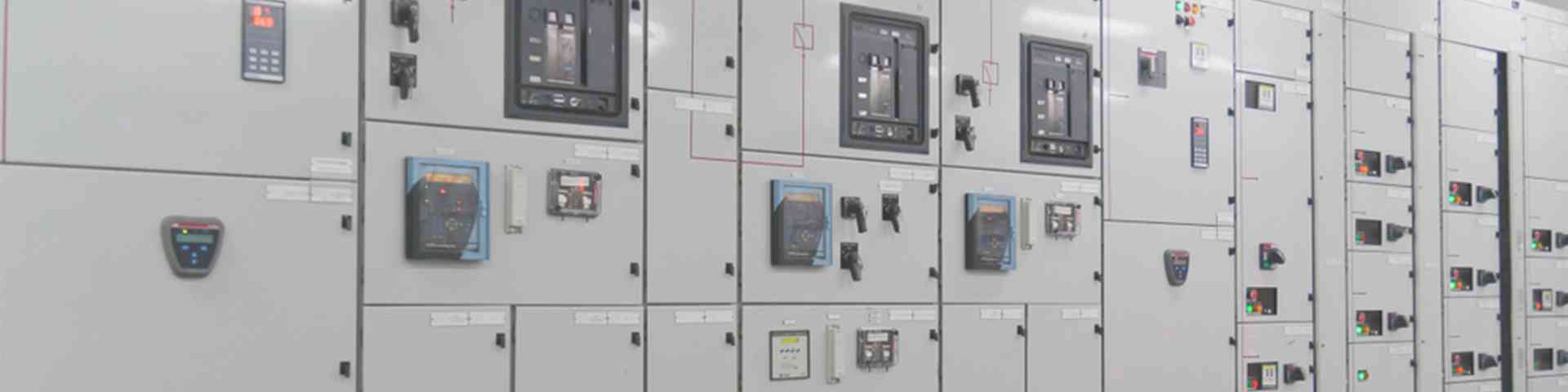
NextGen Power Controls is a reliable Solar 415V ACDB Manufacturer in India, providing customized AC Distribution Boards for rooftop, commercial and industrial solar power projects. Our 415V Solar ACDB panels are engineered to receive, protect and distribute three-phase AC power generated by solar inverters before it is supplied to the main LT panel, transformer or utility grid.
Every Solar 415V ACDB is manufactured according to the project’s inverter capacity, load current, number of incoming and outgoing feeders, fault level, installation environment and monitoring requirements. The panels can be supplied in indoor or outdoor configurations with copper or aluminium busbars, branded protection devices and suitable IP-rated enclosures.

A Solar 415V ACDB, or AC Distribution Board, is an electrical protection and distribution panel installed on the AC side of a grid-connected solar power system. It receives three-phase AC output from one or multiple solar inverters and transfers it safely to the facility’s power distribution system or grid interconnection point.
The ACDB protects the solar installation against overload, short circuit, voltage surges, earth faults and other abnormal electrical conditions. It also provides electrical isolation, metering and organized distribution of the generated AC power. A properly designed ACDB helps protect solar inverters, outgoing cables, LT panels and other connected equipment while improving system safety and operational reliability.
A Solar 415V ACDB receives three-phase AC power generated by one or multiple solar inverters. Before the generated electricity is supplied to the main electrical distribution system or utility grid, it passes through several protection and monitoring devices installed inside the ACDB panel. The incoming AC supply first passes through an MCCB or isolator. The breaker protects the system against overload and short circuit conditions and allows the electrical supply to be safely isolated during maintenance.
Surge Protection Devices protect connected equipment from lightning-induced surges and transient overvoltage. MCBs or MCCBs protect individual outgoing feeders, while digital meters monitor voltage, current, frequency, power factor, and energy parameters. Once the power passes through all protection stages, it is distributed through copper or aluminium busbars to the main LT panel, transformer, or utility connection point. This arrangement ensures safe, controlled, and efficient transfer of solar-generated electricity.
415V AC
Three phase, four wire
50 Hz/60 Hz
63A to 1250A or project-specific
MCCB, ACB or isolator
MCB or MCCB
Electrolytic-grade copper or aluminium
CRCA, GI or stainless steel
IP42, IP54, IP55 or IP65
Wall mounted or floor mounted
Digital multifunction meter or energy meter
Type I, Type II or project-specific SPD
Top or bottom
Indoor or outdoor
NextGen Power Controls manufactures customized electrical control and distribution panels for solar, commercial, industrial and infrastructure applications. Our engineering approach focuses on electrical safety, proper component selection, manufacturing quality and ease of operation and maintenance.
Customers choose us for:
Get a free consultation and a quote built around your actual load, fault level and site conditions.
Established as a company in the year 2014, "Nextgen Power Controls" is an eminent manufacturer, supplier and trader of a comprehensive assortment of electrical control panel, power distribution panel, apfc panel, amf panel, mcc panel, aabbreviation panel, abbreviation control panel, motor starter panel, and dg sync panels, etc.
Read MoreMade with and passion by Ads India.