
In modern industrial power distribution systems, selecting the right electrical panels is essential for achieving energy efficiency, operational safety, and compliance with global standards. Two widely used solutions are APFC Panels (Automatic Power Factor Correction Panels) and MCC Panels (Motor Control Center Panels). At Nextgen Power Controls, we specialize in delivering advanced industrial power solutions designed to improve performance, reduce electricity costs, and ensure compliance with IEC standards. This comparative guide is created for engineers, consultants, and procurement managers to clearly understand the difference between APFC vs MCC panels and when to use each effectively.
What are APFC Panels vs MCC Panels?
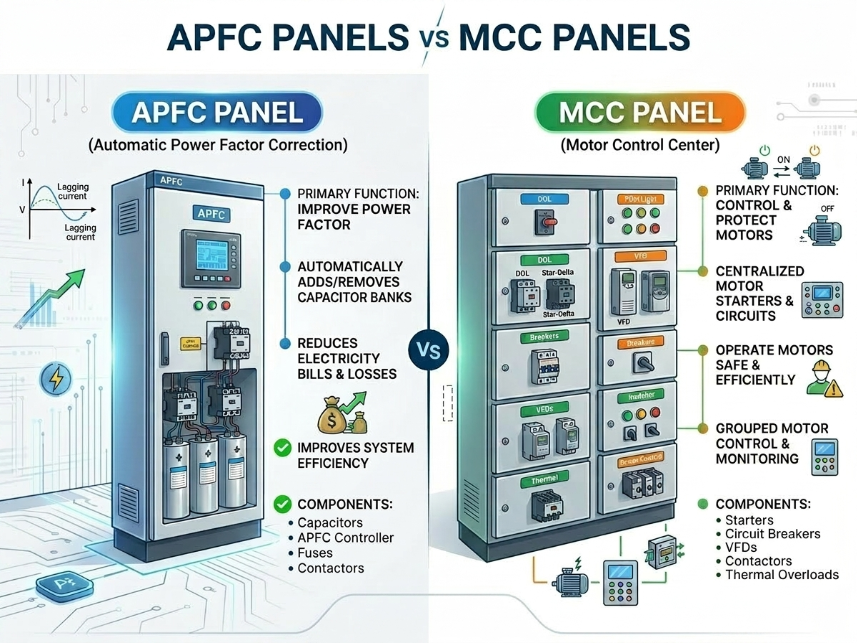
APFC Panels (Automatic Power Factor Correction Panels) are designed to maintain and improve the power factor of an electrical system automatically. They monitor reactive power and switch capacitor banks ON/OFF as required to optimize power factor, reducing energy losses and utility penalties.
On the other hand, MCC Panels (Motor Control Center Panels) are used to control and protect multiple electric motors from a centralized location. These panels distribute power, provide motor protection, and allow manual or automated control of motors used in industrial operations.
In simple terms:
- APFC panels = Energy optimization & power factor correction
- MCC panels = Motor control & power distribution
This makes APFC vs MCC comparison essential for industries aiming for efficient electrical infrastructure planning.
Working Principle & Containment
APFC Panels Working Principle
APFC panels work on real-time monitoring of power factor using a relay system. When the power factor drops below a set threshold, capacitor banks are automatically switched in steps to compensate for reactive power. This results in:
- Reduced electricity bills
- Improved system efficiency
- Lower transmission losses
- Compliance with utility standards
MCC Panels Working Principle
MCC panels function as centralized motor control units. They include components like circuit breakers, contactors, overload relays, and variable frequency drives (VFDs). Their primary role is to ensure:
- Safe motor start/stop operations
- Protection against overloads and faults
- Efficient load management
- Centralized monitoring and control
Containment & Safety Standards
Both APFC and MCC panels are designed as per IEC standards, ensuring safety, reliability, and durability in industrial environments. Proper enclosure design also ensures protection against dust, heat, and electrical faults, making them suitable for continuous industrial operation.
Applications in Industry
APFC Panels are widely used in industries where power consumption is high and reactive loads are significant. Common applications include manufacturing plants, textile mills, cement industries, steel production units, commercial complexes, and large HVAC systems. Any facility with fluctuating electrical loads benefits from APFC systems due to reduced electricity costs and improved power factor.
MCC Panels are essential in industries that rely heavily on motor-driven operations. These include power plants, water treatment facilities, oil and gas industries, mining operations, automotive manufacturing, and food processing units. MCC systems ensure uninterrupted motor control, reducing downtime and improving production efficiency. Together, APFC and MCC panels form a complete industrial power management solution, balancing energy optimization with operational control.
Conclusion
Understanding the difference between APFC Panels vs MCC Panels is crucial for designing efficient industrial electrical systems. While APFC panels focus on reducing energy costs and improving power factor, MCC panels ensure safe, centralized motor control for industrial operations. Both systems complement each other and are vital for modern infrastructure. Selecting the right combination leads to better efficiency, lower maintenance, and long-term operational stability.